A frontal studio/documentation view isolates a horned theatrical mask against a pale green-gray field, converting an object of performance into an ethnographic and art-historical specimen. The mask’s bald cranial dome, metallic-gold eyes, open black mouth, fanged dentition, and asymmetrical facial carving operate as a coded grammar of demonic affect rather than naturalistic portraiture. Its semiotics align strongly with Japanese Noh or related theatrical mask traditions, especially the Hannya type, where jealousy, suffering, rage, and transformed femininity are formalized through horns, bared teeth, and a simultaneously anguished-aggressive visage. Technically, the reproduction resembles a museum catalogue or archival object photograph: even illumination, shallow shadow, controlled color, moderate resolution, and visible digital compression. The artifact is not captured in performance but suspended in taxonomic stillness, emphasizing material patina, lacquer-like surface wear, and ritualized expressivity.


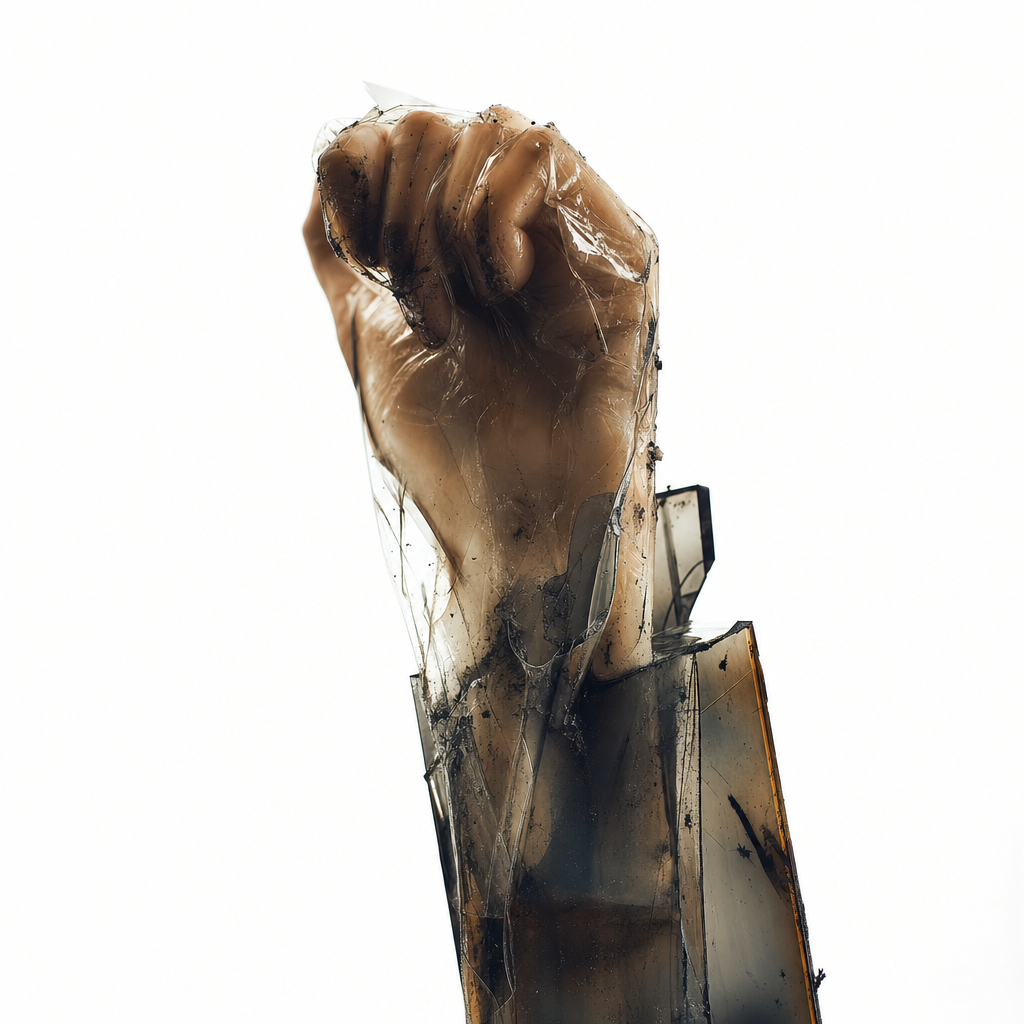
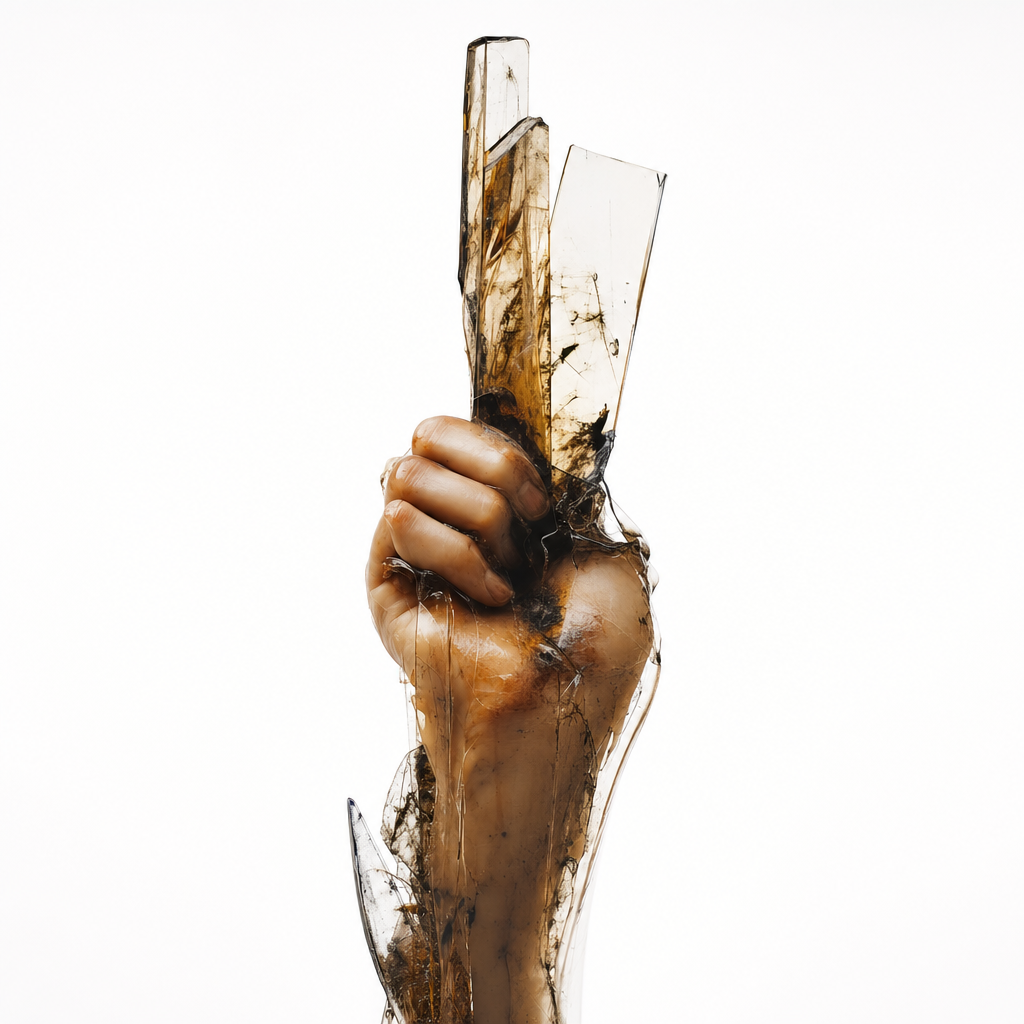
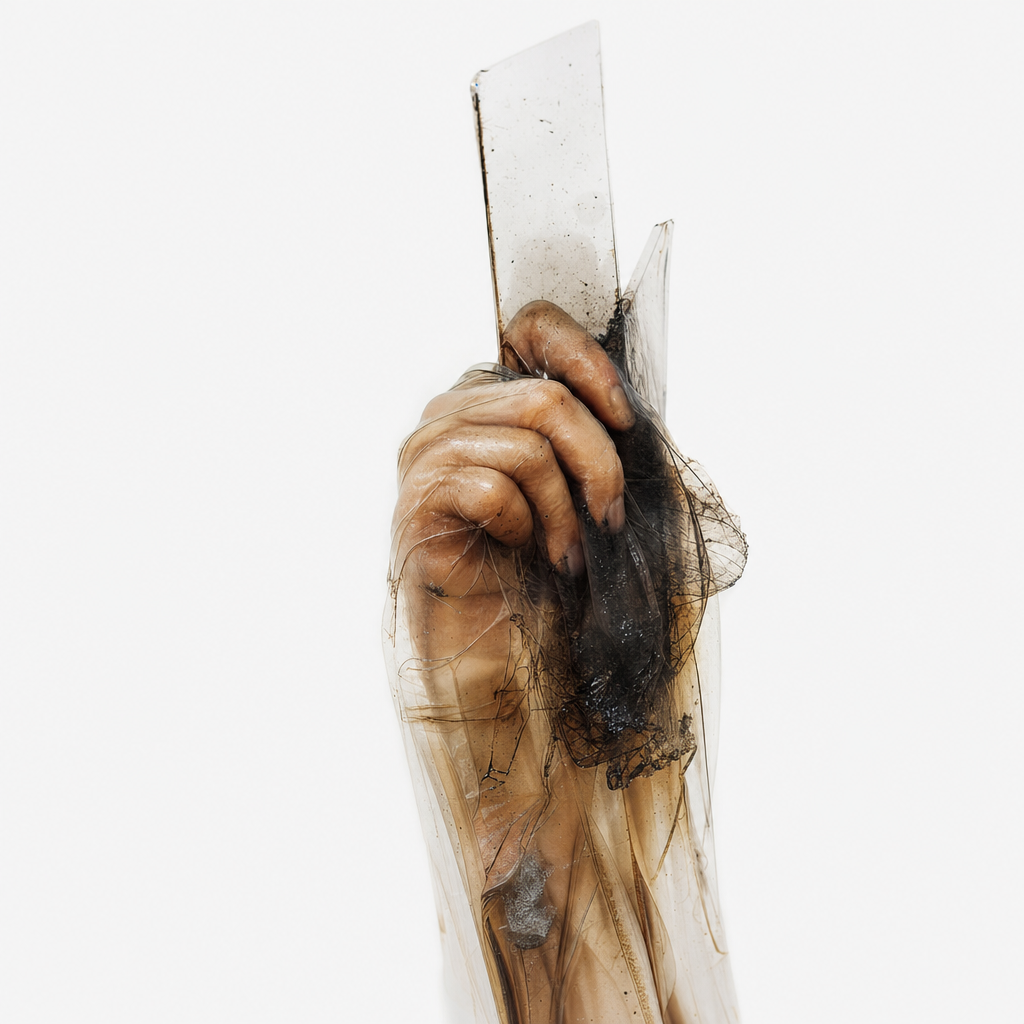
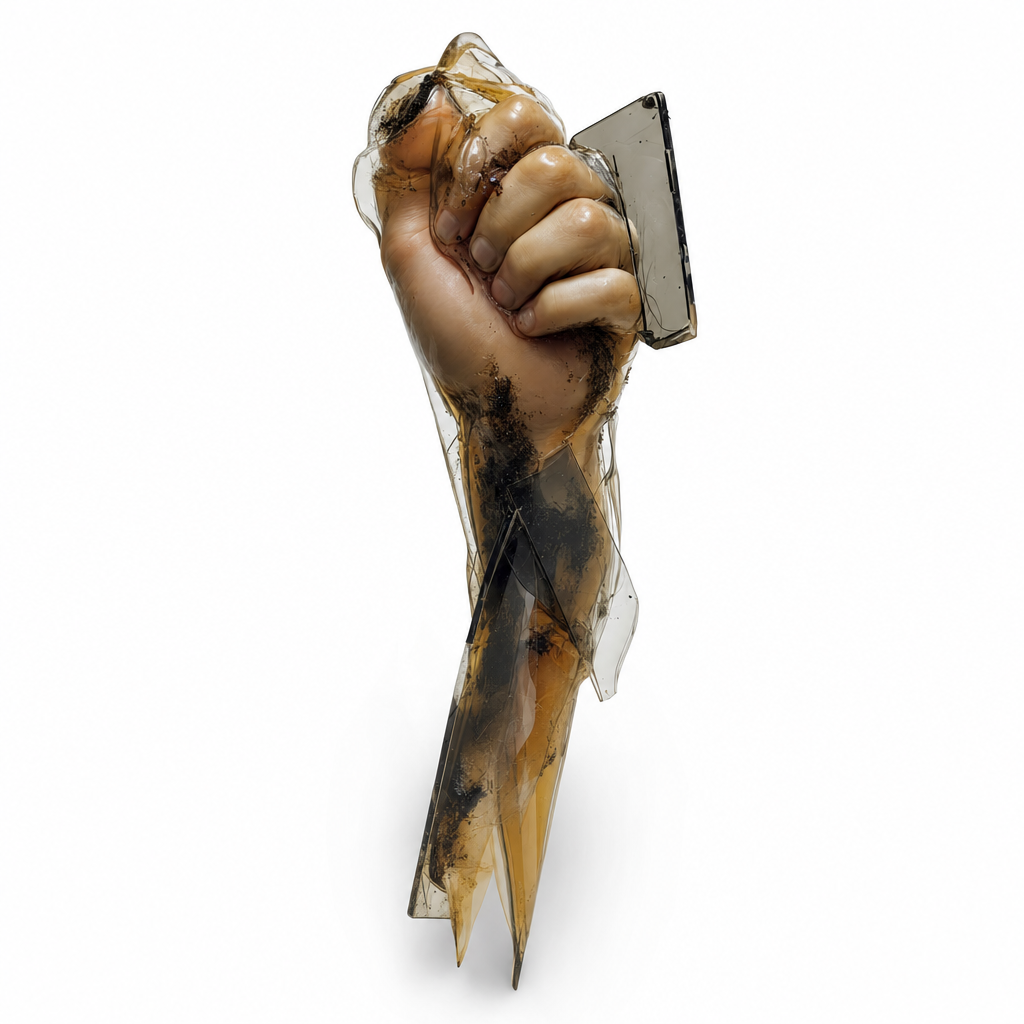
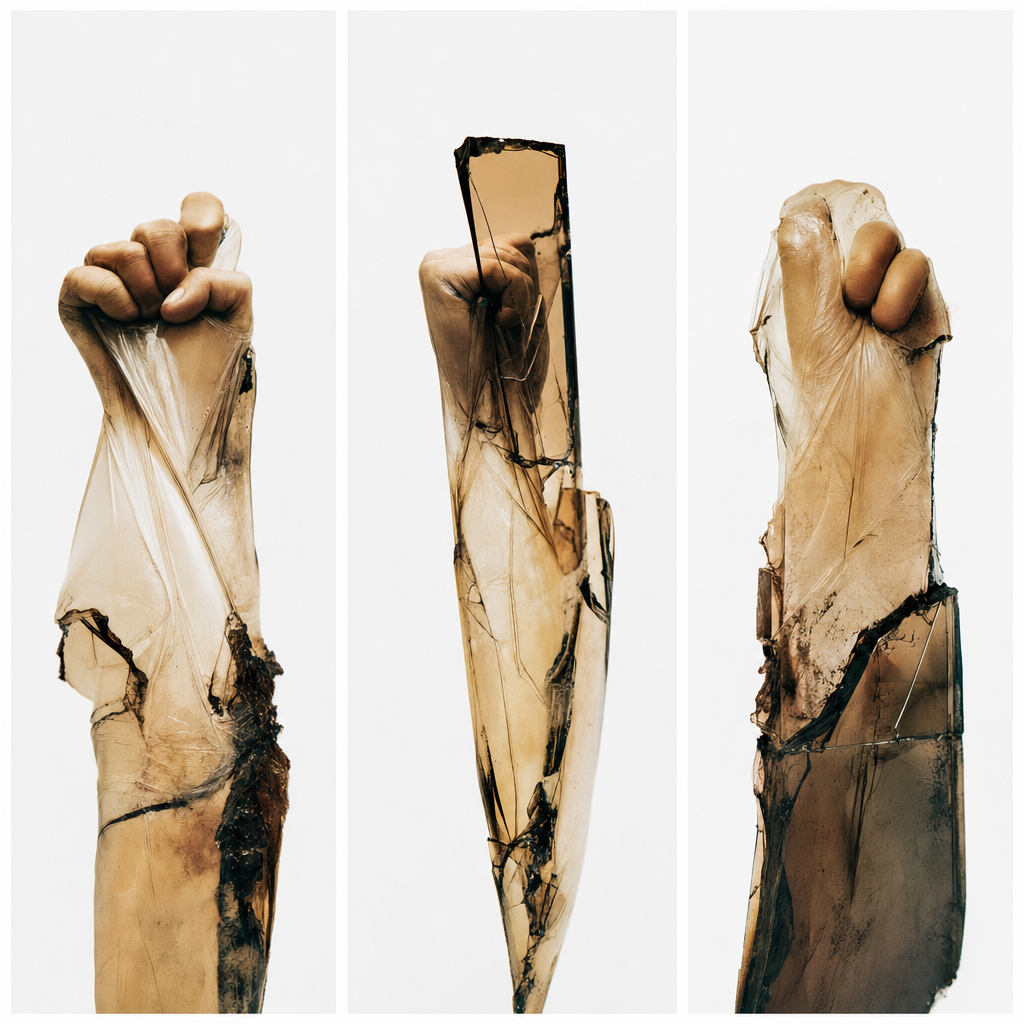
A high-key, near-clinical field isolates a biomorphic assemblage in which a clenched human hand, translucent brown sheeting, and dark glasslike fragments merge into a single unstable sign. The object oscillates between prosthesis, specimen, fashion accessory, and forensic remnant; its semiotic force comes from this failure of categorical closure. Technical evidence suggests a digitally generated or heavily synthesized image rather than documentary photography: anatomical continuities are ambiguous, edges liquefy, transparent materials behave inconsistently, and local detail alternates between glossy pseudo-realism and painterly smear. The white void functions less as studio background than as an erasure of context, converting the raised limb into an emblem of extraction, display, and fragile embodiment.
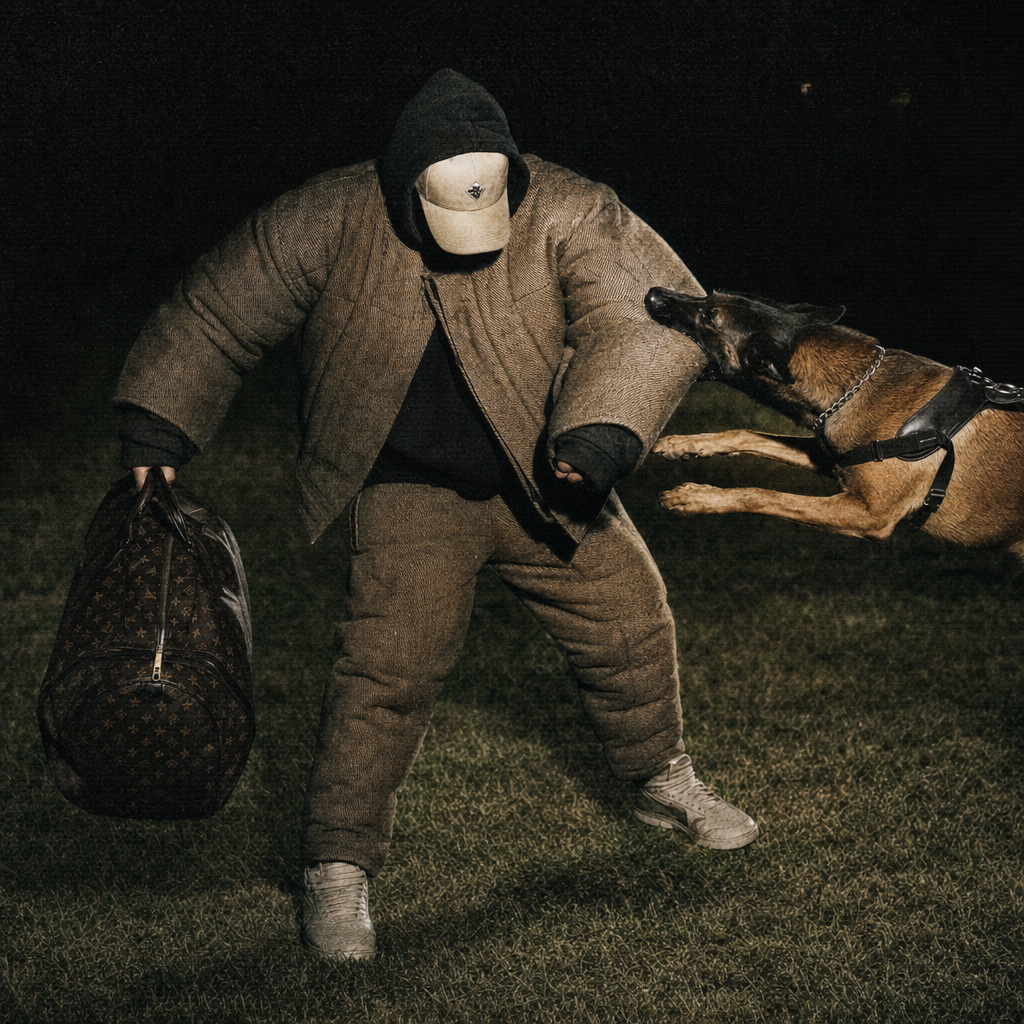
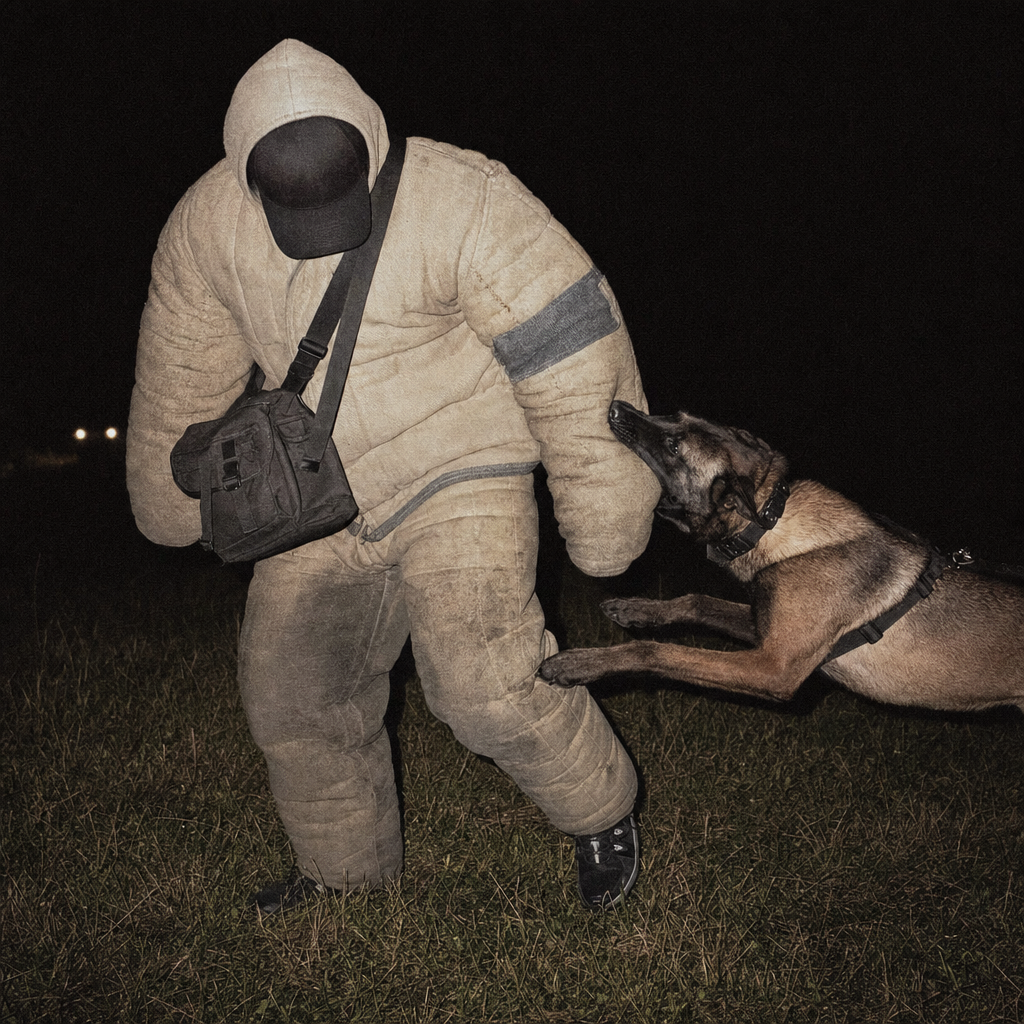
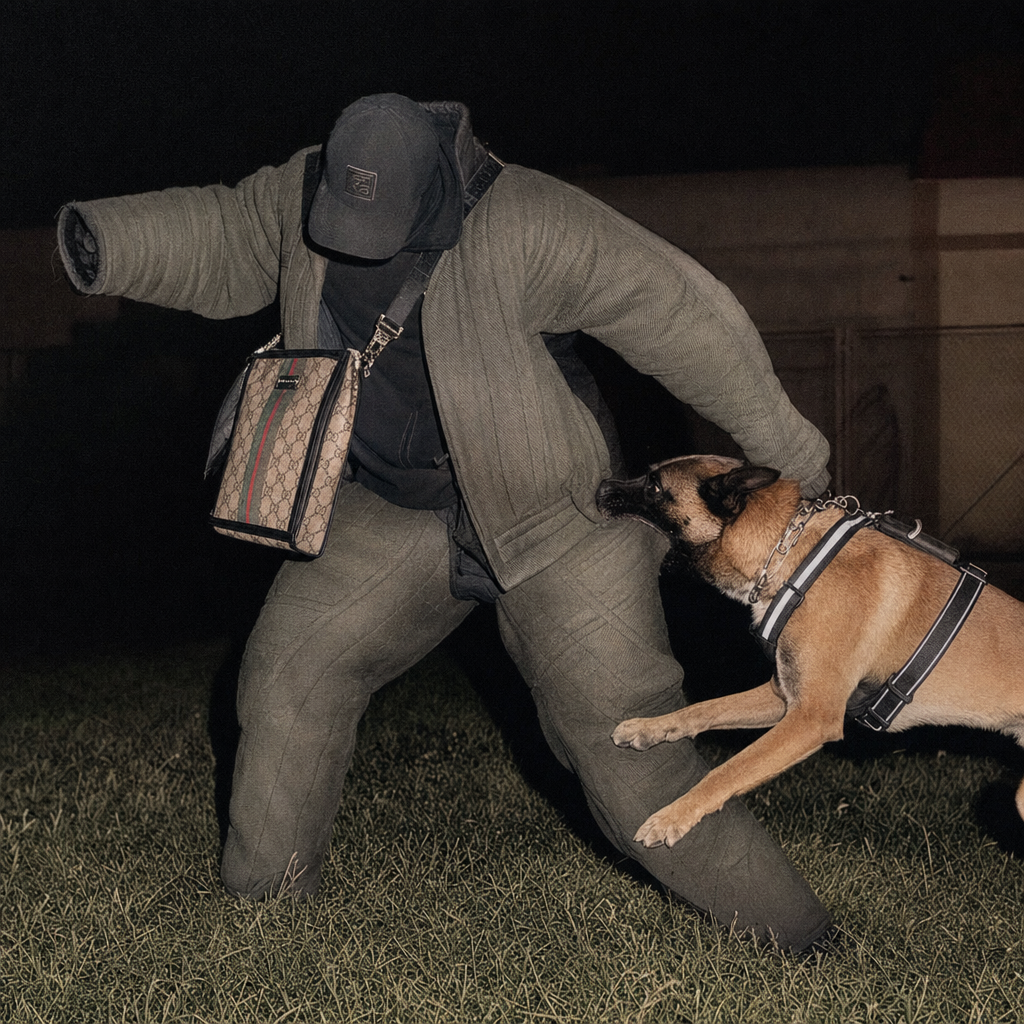
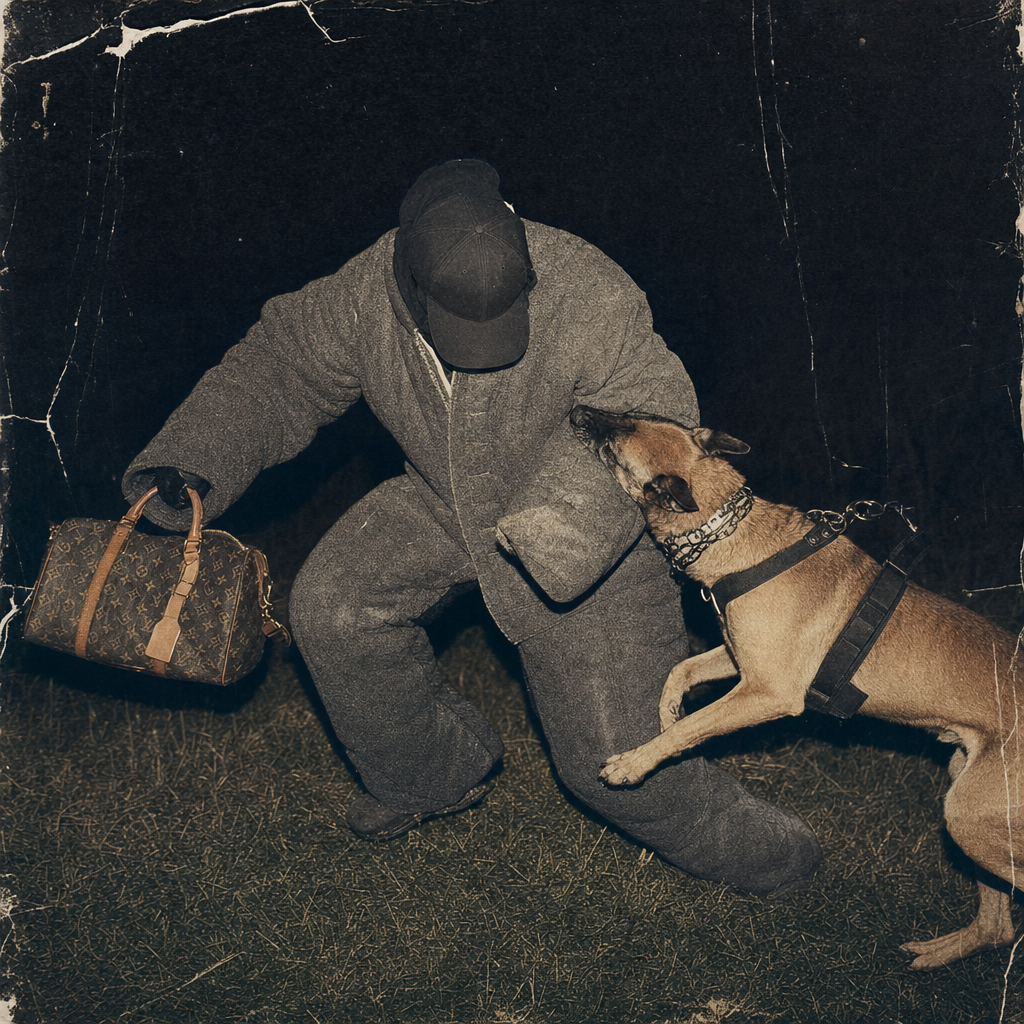
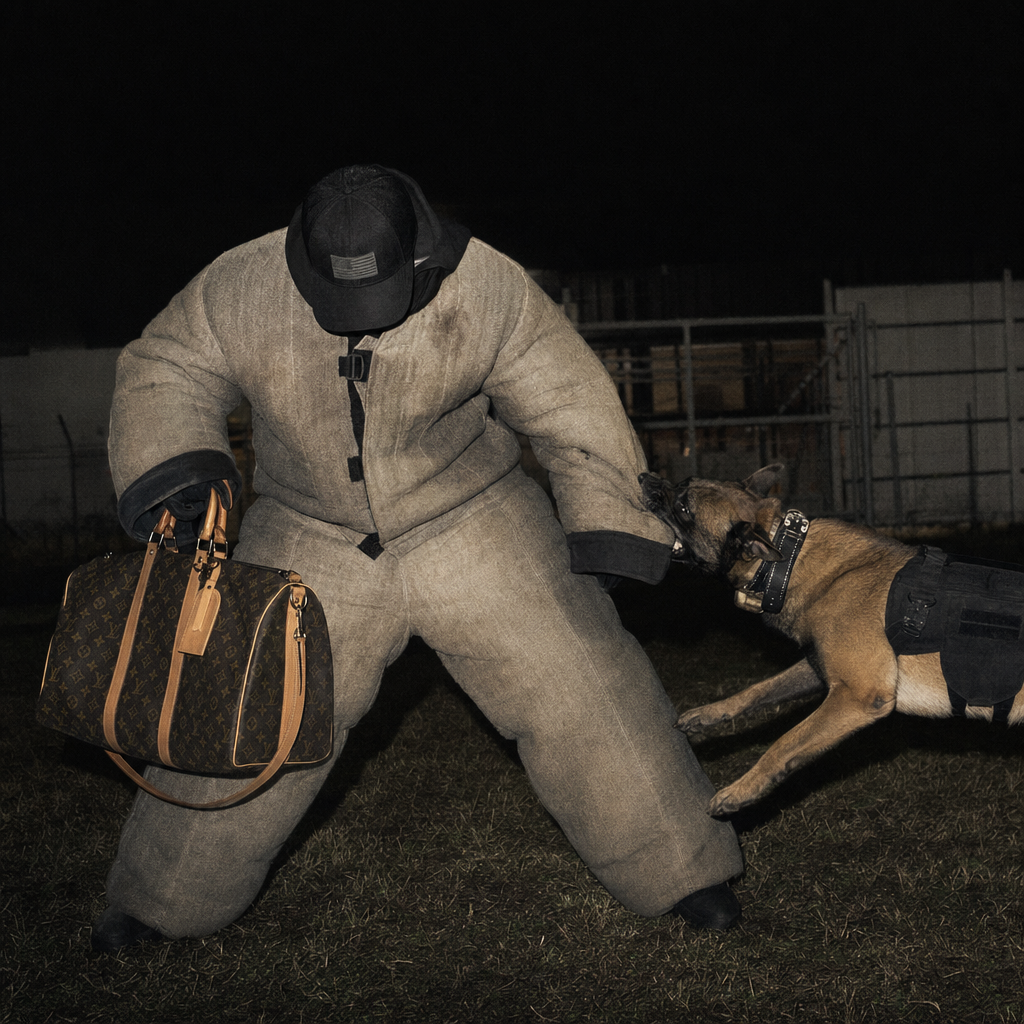
A flash-struck training tableau is re-coded through fashion semiotics: the padded bite suit, working dog, and bent posture belong to canine security practice, yet the branded cap and monogrammed luxury bag displace utility into spectacle. The obscured face suppresses portrait identity, making the body a conduit between discipline, consumption, and controlled aggression. Technically, the frame reads as a degraded editorial or internet-circulated image rather than direct documentary evidence: harsh frontal illumination, compressed tonal transitions, visible grain/noise, and softened edge detail create a hybrid of paparazzi flash, subcultural fashion styling, and paramilitary exercise. The dog’s bite anchors the scene in bodily risk, while the luxury object functions as a fetishized prop, staging conflict between status goods and animal force.
A compressed ringside sports photograph freezes a high-velocity exchange in mixed martial arts: two female fighters form an X-shaped kinetic diagram through opposing extended legs, gloved hands, exposed torsos, and cage diagonals. The image operates as both athletic documentation and combat spectacle, translating bodily risk into a legible media icon of impact, discipline, and televised violence. Its semiotics depend on suspension: neither fighter fully dominates, so the frame privileges mutual vulnerability over heroic closure. Technically, the picture bears the traits of low-resolution web press imagery: shallow depth of field, motion blur around limbs, hard arena lighting, and visible JPEG softness. The black chain-link cage functions as optical obstruction and institutional sign, marking the bout as regulated conflict rather than street violence.





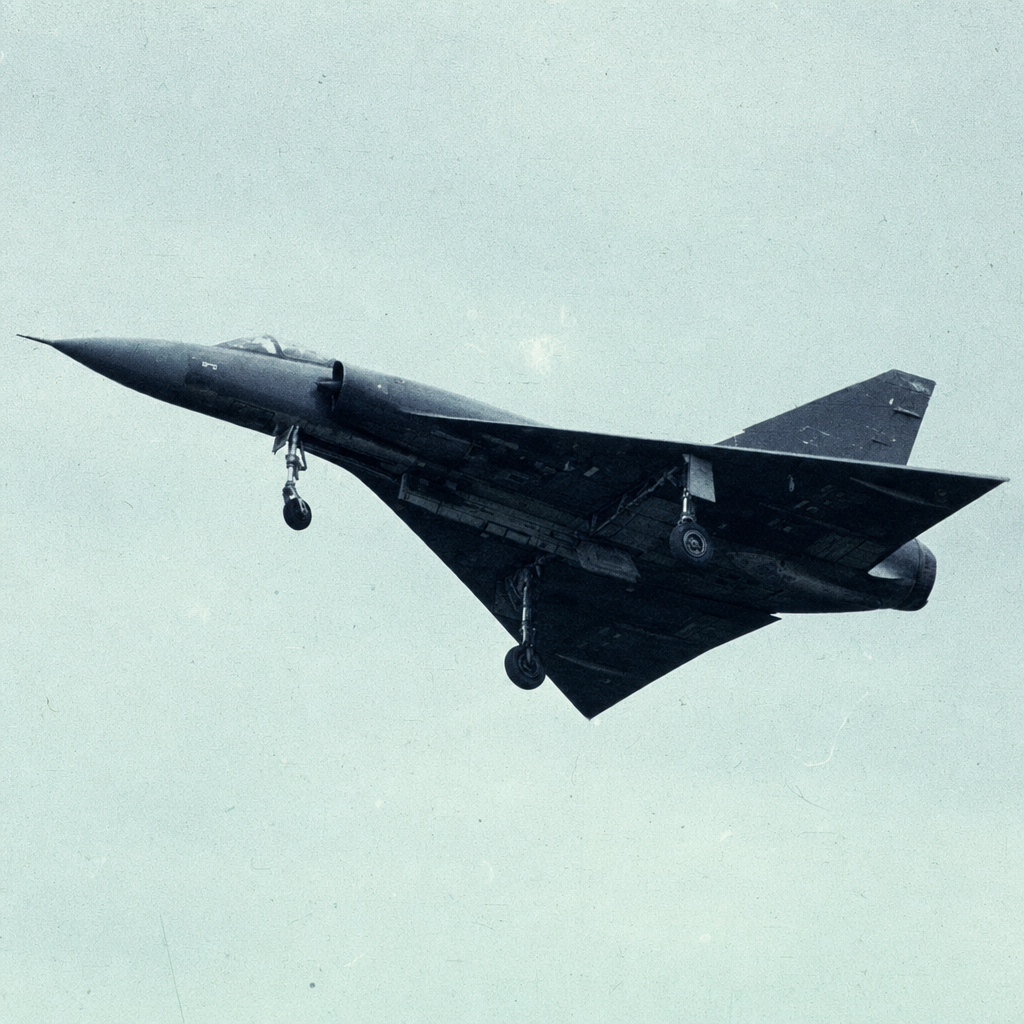
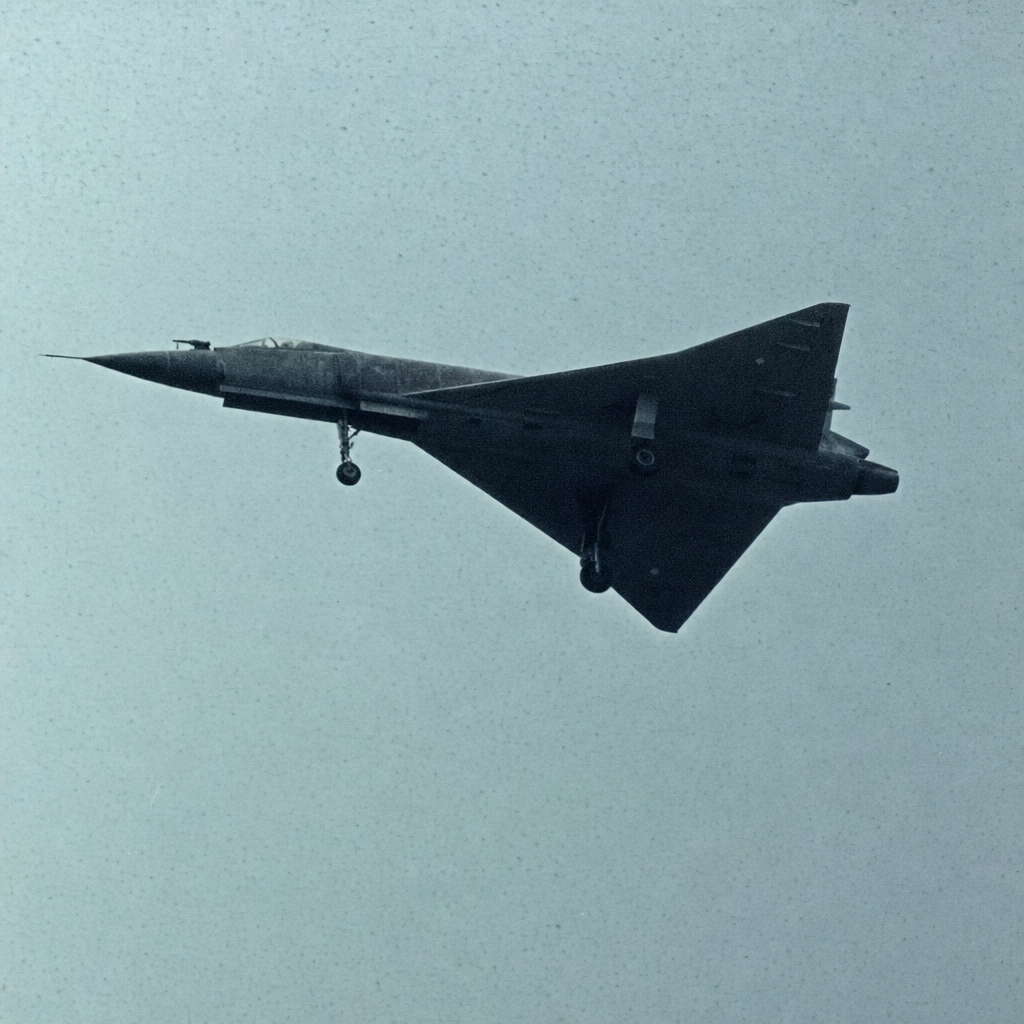
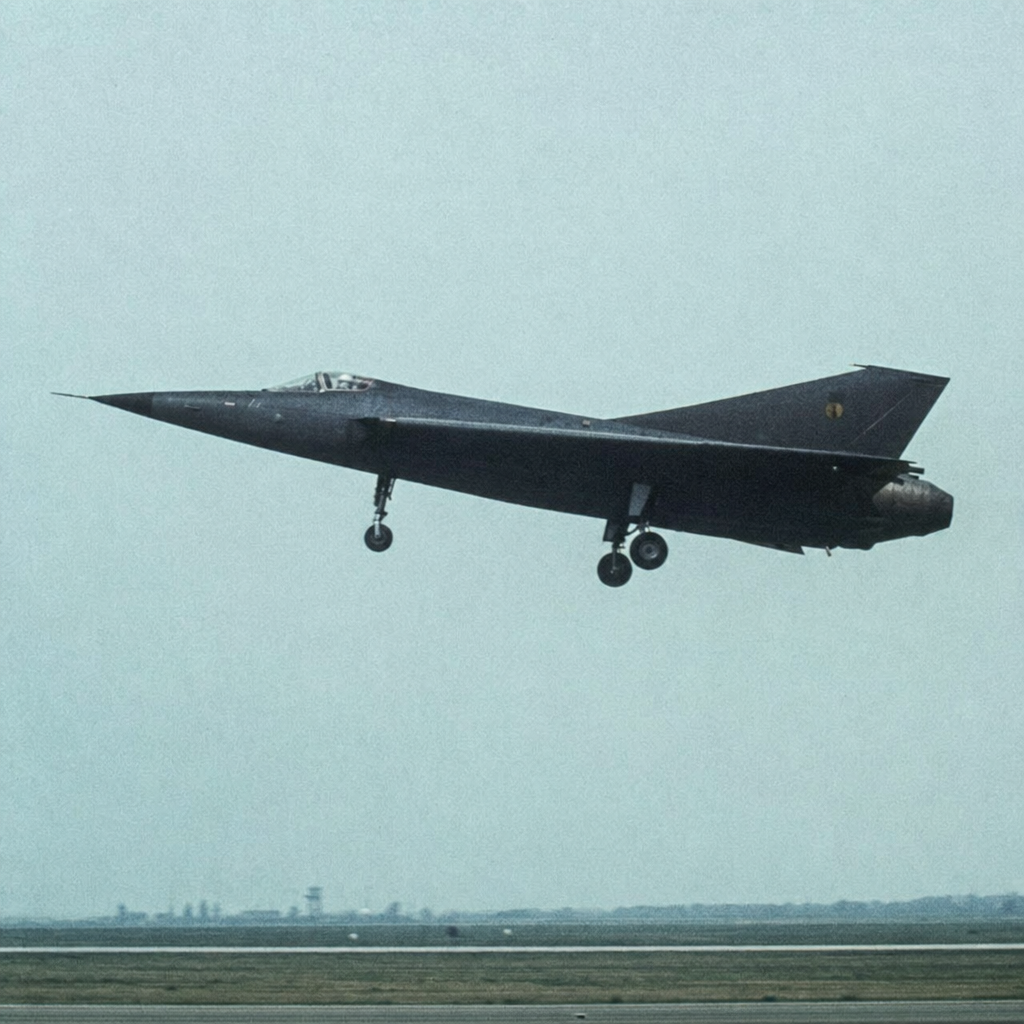
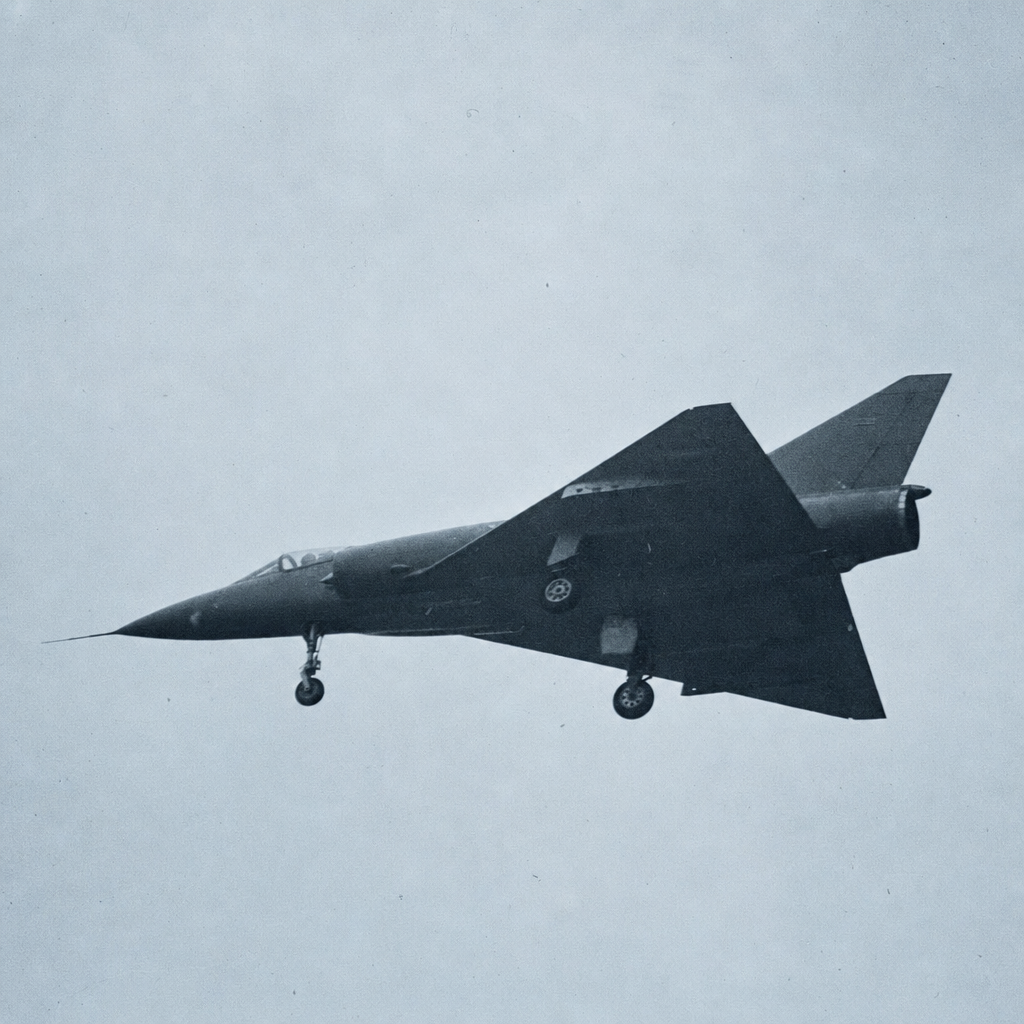
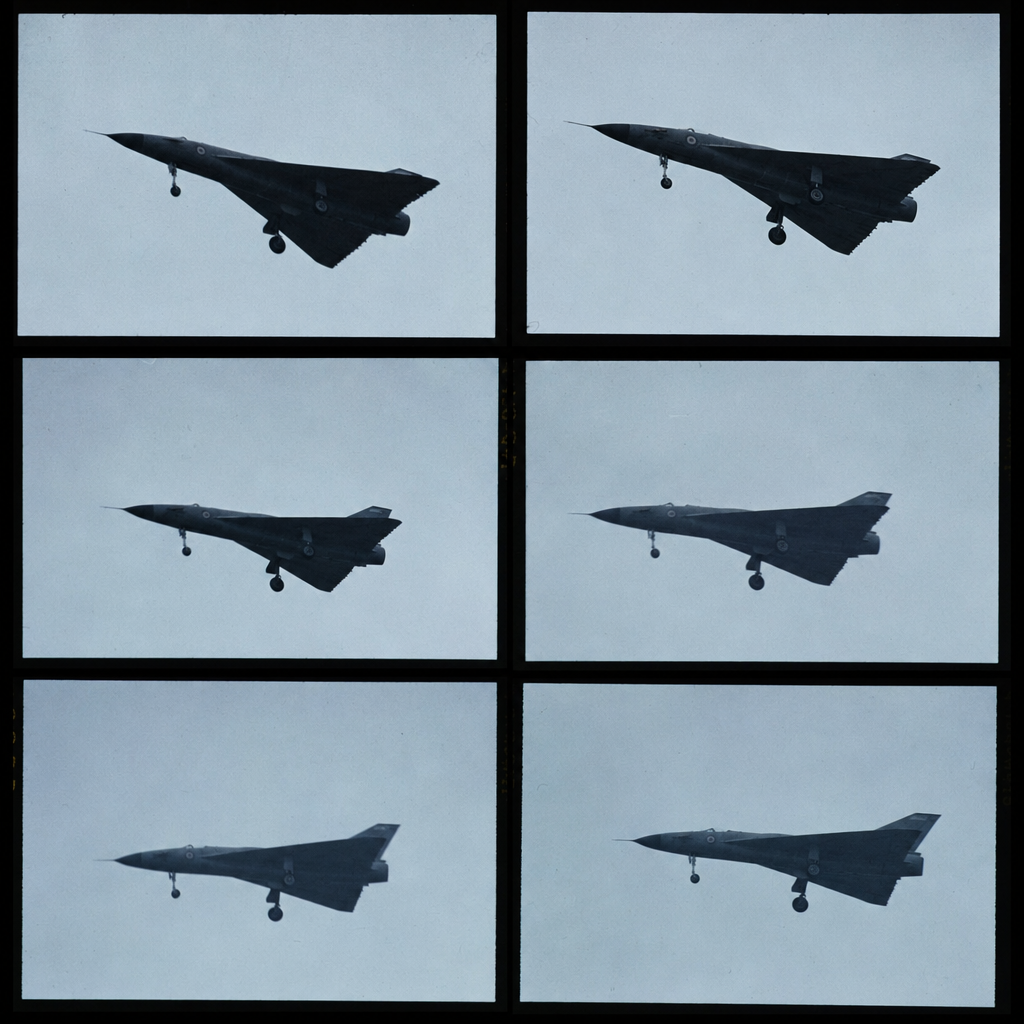
A single delta-wing military aircraft is isolated against a pale, nearly featureless sky, producing a diagrammatic silhouette more than a narrative scene. The image operates through the semiotics of aerodynamic abstraction: sharp nose probe, triangular planform, exposed landing gear, and dark ventral mass convert the machine into a sign of Cold War speed, interception, and state technics. Technically it resembles a degraded telephoto aviation photograph or scanned archival reproduction: contrast is compressed, edges are softened by atmospheric haze and reproduction loss, and the blue-gray palette carries analog or early-digital noise. The underside view denies pilot visibility and human scale, emphasizing the aircraft as system rather than person. Historical attribution is plausible but not secure; the form suggests a mid-to-late twentieth-century European delta interceptor rather than contemporary stealth imagery.